Advanced Longevity Support for Cellular Health
AEON™ is a premium 11-compound formulation designed to support energy metabolism, cellular function, and long-term wellbeing.
Most supplements focus on a single ingredient. AEON™ brings together 11 carefully selected compounds in one comprehensive formulation, created for people interested in healthy ageing, cellular nutrition, and long-term wellbeing.
Each ingredient in AEON™ has been the subject of scientific research in areas such as oxidative stress, cellular maintenance, metabolic processes, and biological ageing, which has led to growing interest in combining these compounds as part of a longevity-focused nutritional approach. Research in this field is ongoing, and scientific understanding continues to evolve.
AEON™ was designed to simplify complex supplement routines by combining multiple well-studied compounds into a single daily formulation.
Below, we outline the origin, characteristics, and research background of each ingredient, with links to independent, peer-reviewed studies so you can explore the science for yourself.
Manufactured in the USA
Third-party tested
Premium ingredients

Liposomal Formula
Our formulation uses a liposomal delivery system, a technology widely studied for its ability to help protect certain nutrients and support their bioavailability compared with standard forms (source).
We also include piperine, a compound commonly used in nutritional formulations and researched for its role in enhancing the bioavailability of certain plant compounds, including polyphenols such as resveratrol (source).
AEON™ is free from preservatives, additives, gluten, and animal-derived ingredients, and contains zero calories. It is manufactured in the USA and independently tested by third-party laboratories for potency and heavy metals to help ensure consistent quality in every batch (view results).
COMPOUNDS IN AEON™:
-

Nicotinamide DUO™
Nicotinamide DUO™ is a proprietary NAD+ precursor developed by Perpetua Life® Biotech, based on a specialised blend of nicotinamide precursor compounds.
NAD+ is a coenzyme present in every cell and plays a role in a wide range of biological processes, including cellular energy metabolism and gene expression
(22, 23)Levels of NAD+ are known to decline with age, which has led to growing scientific interest in NAD+ metabolism and the role of precursor compounds in this area of research (23)
NAD+ precursor compounds, including nicotinamide derivatives, have been widely studied in both laboratory and human research investigating cellular energy metabolism, ageing biology, and related metabolic processes (24)
For example, published studies have explored how supplementation with nicotinamide compounds may influence NAD+ levels and markers of cellular metabolism in older adults, contributing to ongoing research in this field (24B)(25)
The numbered references link to independent, peer-reviewed studies for those who wish to explore the research in more detail.
-

Fisetin
Fisetin is a naturally occurring flavonoid found in a variety of fruits and plants. It has attracted significant scientific interest and is widely studied in research exploring cellular ageing, oxidative stress, and senescence.
Researchers have investigated fisetin in laboratory and preclinical studies examining cellular signalling pathways, antioxidant activity, and mechanisms involved in cellular maintenance and ageing biology (F01) (F02) (F03)Fisetin is also the subject of ongoing research exploring the biological activity of plant flavonoids and their potential role in areas such as cellular protection and metabolic regulation, with studies continuing in both laboratory and animal models (F04) (F05) (41)
The numbered references link to independent, peer-reviewed studies for those who wish to explore the research in more detail.
-

Quercetin
Quercetin is a naturally occurring plant flavonoid found in a variety of foods, including fruits, vegetables, and red wine.
It has been widely studied for its antioxidant properties and is the subject of extensive scientific research exploring cellular signalling pathways, oxidative stress, and metabolic processes (Q1)
Research publications have investigated quercetin in laboratory and preclinical models examining areas such as cellular regulation, gene expression, and biological ageing mechanisms, contributing to ongoing interest in flavonoids within nutritional science (Q2) (F03) (Q3) (Q4)
Studies have also explored how quercetin may influence cellular processes related to circadian biology and age-associated pathways in laboratory settings (Q4)
The numbered references link to independent, peer-reviewed studies for those who wish to explore the research in more detail.


-

Resveratrol
Resveratrol is a naturally occurring polyphenol found in grapes, berries, peanuts, and red wine. It has attracted significant scientific interest and is widely studied in research exploring cellular signalling pathways, including those involving sirtuins and other regulatory proteins linked to ageing biology (42)
Laboratory and preclinical studies have investigated resveratrol in relation to oxidative stress, cellular defence mechanisms, and metabolic regulation, contributing to ongoing research in the field of healthy ageing (R1)(R2)(R3)(R4)
Research publications have also explored how resveratrol may influence gene expression and cellular pathways associated with antioxidant activity and circadian biology in experimental models
(R5)(Q4)The numbered references link to independent, peer-reviewed studies for those who wish to explore the research in more detail.
-

Astragalus
Astragalus membranaceus is a botanical traditionally used in Chinese herbal practice. It has attracted scientific interest and is studied for its bioactive compounds and their role in cellular and metabolic research (40)
Research publications have investigated astragalus extracts and polysaccharides in laboratory and preclinical studies examining cellular signalling pathways, oxidative stress, autophagy, and mechanisms associated with cellular maintenance and ageing biology (A1)(A2) (A3) (A4)
Astragalus is also the subject of ongoing research exploring its bioactive constituents and their interaction with various biological pathways in experimental models (A5)
The numbered references link to independent, peer-reviewed studies for those who wish to explore the research in more detail.
-

Epigallocatechin Gallate (EGCG)
Epigallocatechin gallate (EGCG) is a naturally occurring polyphenol concentrated in green tea. It has been widely studied for its antioxidant properties and is the subject of extensive scientific research in the field of nutritional biochemistry (9, 10, 11)
Researchers have investigated EGCG in laboratory and preclinical studies exploring its interaction with cellular signalling pathways associated with energy metabolism, mitochondrial biology, and ageing-related processes, including pathways such as AMP-activated protein kinase (AMPK) (12)
EGCG has also been studied in relation to autophagy and cellular maintenance mechanisms, contributing to ongoing scientific interest in its potential role within longevity-focused nutritional research.
Population and experimental studies continue to examine associations between green tea polyphenols and various health-related outcomes in different models (13, 14, 15)
The numbered references link to independent, peer-reviewed studies for those who wish to explore the research in more detail.


-

Trimethylglycine
Trimethylglycine (TMG), also known as betaine, is a naturally occurring compound involved in methylation processes within the body. It plays a role in homocysteine metabolism and is widely studied in research examining cardiovascular and metabolic pathways [source]
Levels of homocysteine are known to change with age, which has led to growing scientific interest in nutrients involved in methylation and one-carbon metabolism [source]
TMG has been investigated in both laboratory and human studies exploring areas such as metabolic regulation, cognitive function, and ageing-related biological processes [source]
Ongoing research continues to examine associations between dietary betaine intake and various health-related outcomes in different populations [source]
The numbered references link to independent, peer-reviewed studies for those who wish to explore the research in more detail.
-

L-Theanine
L-theanine is a naturally occurring amino acid concentrated in certain teas, including green tea. It has been widely studied for its interaction with neurological and stress-related pathways and is the subject of ongoing research in nutritional neuroscience (35, 36)
Laboratory and preclinical studies have investigated L-theanine in relation to oxidative stress, cellular ageing models, and metabolic signalling pathways (T1)(T2)(T3)
Research publications have also explored its interaction with neurotransmitter systems and cognitive processes in experimental settings, contributing to scientific interest in its role within brain and behavioural research (T4)(T5)
The numbered references link to independent, peer-reviewed studies for those who wish to explore the research in more detail.
. -

Spermidine
Spermidine is a naturally occurring polyamine found in certain foods and involved in fundamental cellular processes. It has attracted significant scientific interest for its role in cellular maintenance and metabolic regulation.
Research has explored spermidine in relation to oxidative stress, inflammatory signalling pathways, and cellular respiration, contributing to ongoing investigation in the field of healthy ageing and longevity biology [1]
Spermidine has also been widely studied for its involvement in autophagy, a cellular process associated with the recycling and renewal of cellular components. This has led to growing research interest in its potential relevance to cognitive and metabolic ageing models [2]
The numbered references link to independent, peer-reviewed studies for those who wish to explore the research in more detail.


-
Urolithin A 1,000mg Liposomal Mitochondrial Formula
Regular price £59.00Regular price£79.99Sale price £59.00Sale -
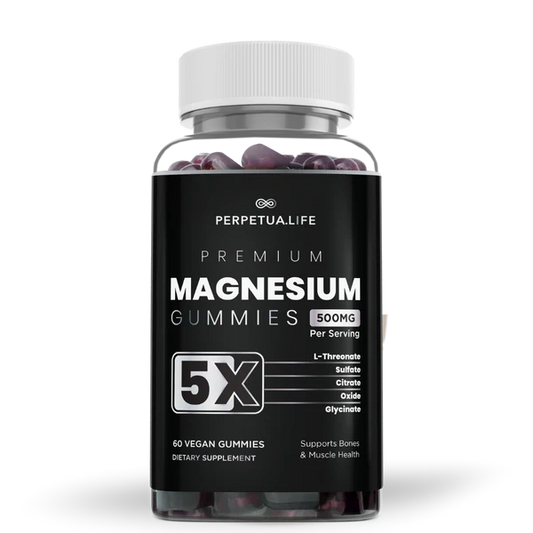
Magnesium Complex Gummies – 5 Forms of Magnesium
Regular price £29.00Regular price£39.00Sale price £29.00Sale -
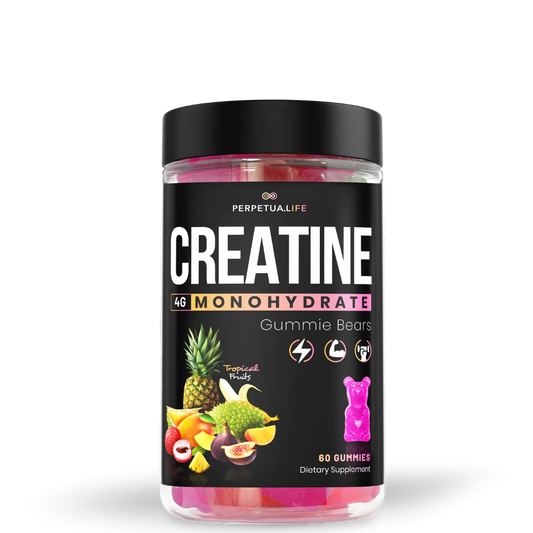
Creatine Monohydrate 4g Low-Sugar Gummy Bears
Regular price £31.99Regular price£45.00Sale price £31.99Sale -
AEON White™ NAD+ Liposomal Longevity Complex with Curcumin & AKG
Regular price £59.00Regular price£79.00Sale price £59.00Sale