

This is my 6 th bottle and I will continue ordering it My daughter is also taking it and she loves it
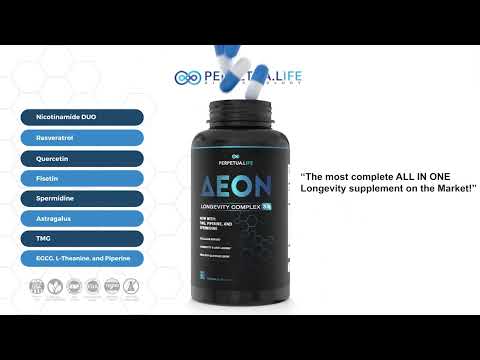
AEON™ NAD+ Liposomal Longevity Complex with Nicotinamide DUO™
Supports energy, recovery & healthy ageing
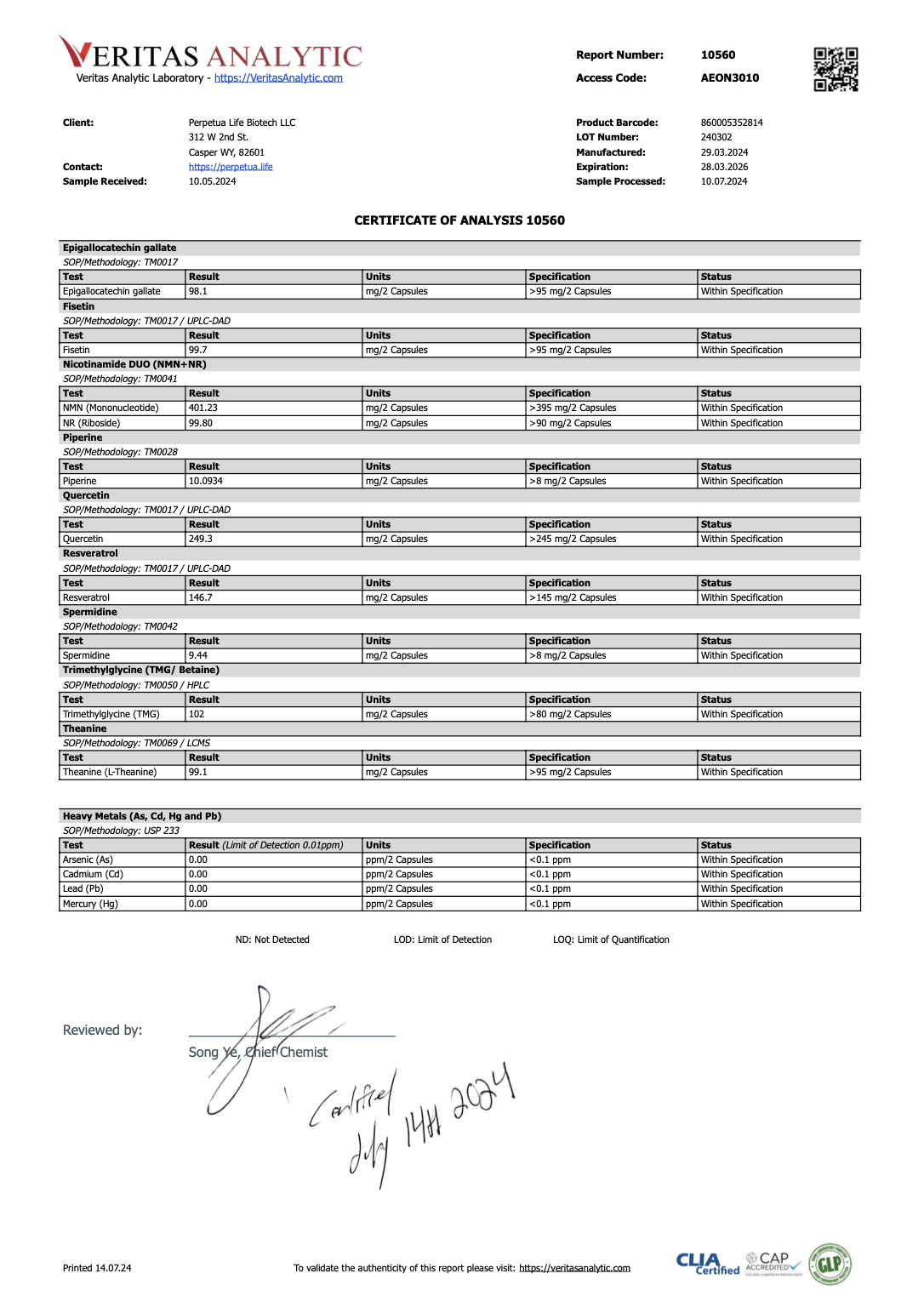
✓ Third-party tested for purity, potency & heavy metals
One-time purchase available in 3 interest-free payments at checkout
60 Capsules • 30-Day Supply
Couldn't load pickup availability
Independently verified for purity, potency, and heavy metals — with full lab results available.
View Verified Lab Results (COA)UK stock • Fast dispatch • No customs (UK orders)
Shipping & International Orders
International shipping available • Import duties & courier fees may apply.
Please note: if an order is refused due to unpaid customs charges, a refund will only be issued if the parcel is returned to us (excluding shipping and return costs). Orders not returned to us are not eligible for a refund.

AEON Black in the morning. AEON White in the evening. Designed to support energy, recovery, and cellular maintenance across a full 24-hour cycle.
Save £28 when purchased as a complete system.
Shop the BundleBundle pricing available on dedicated page
Cellular Energy & Longevity Support
AEON Black™ combines advanced NAD+ precursor compounds with clinically studied longevity ingredients designed to support cellular energy, healthy ageing, and metabolic function.
Take 2 capsules daily in the morning with food.
30 servings per container.
2 capsules per serving.
AEON Black™ is commonly paired with AEON White™ at night as part of a complete 24-hour longevity protocol.
AEON Black™ combines carefully selected longevity compounds designed to support cellular energy, healthy ageing, and metabolic function.
Each serving contains two easy-to-swallow soft gels.

Supports cellular energy metabolism and NAD+ pathways.
Widely studied plant compounds researched for oxidative stress and cellular maintenance.
Selected longevity compounds researched for healthy ageing and cellular support.
Contains Riboflavin (Vitamin B2), Vitamin B6, and Vitamin B12 which contribute to normal energy-yielding metabolism and normal immune function.
Formulated with a liposomal delivery matrix designed to support bioavailability.
Made in the USA and third-party tested for purity and heavy metals.
Vegan-friendly. Non-GMO. Gluten-free.


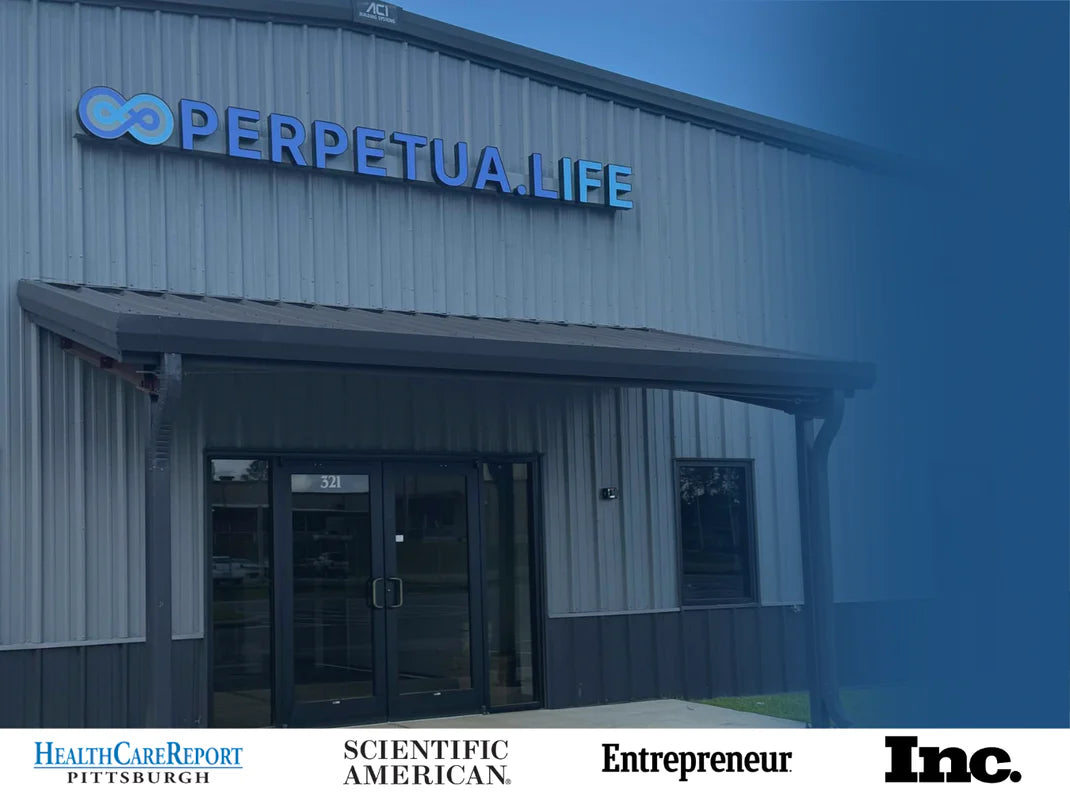


Nicotinamide DUO™ is a proprietary NAD+ precursor developed by Perpetua Life® Biotech, based on a specialised blend of nicotinamide precursor compounds.
NAD+ is a coenzyme present in every cell and plays a role in a wide range of biological processes, including cellular energy metabolism and gene expression
(22, 23)
Levels of NAD+ are known to decline with age, which has led to growing scientific interest in NAD+ metabolism and the role of precursor compounds in this area of research (23)
NAD+ precursor compounds, including nicotinamide derivatives, have been widely studied in both laboratory and human research investigating cellular energy metabolism, ageing biology, and related metabolic processes (24)
For example, published studies have explored how supplementation with nicotinamide compounds may influence NAD+ levels and markers of cellular metabolism in older adults, contributing to ongoing research in this field (24B)(25)
The numbered references link to independent, peer-reviewed studies for those who wish to explore the research in more detail.

Fisetin is a naturally occurring flavonoid found in a variety of fruits and plants. It has attracted significant scientific interest and is widely studied in research exploring cellular ageing, oxidative stress, and senescence.
Researchers have investigated fisetin in laboratory and preclinical studies examining cellular signalling pathways, antioxidant activity, and mechanisms involved in cellular maintenance and ageing biology (F01) (F02) (F03)
Fisetin is also the subject of ongoing research exploring the biological activity of plant flavonoids and their potential role in areas such as cellular protection and metabolic regulation, with studies continuing in both laboratory and animal models (F04) (F05) (41)
The numbered references link to independent, peer-reviewed studies for those who wish to explore the research in more detail.

Quercetin is a naturally occurring plant flavonoid found in a variety of foods, including fruits, vegetables, and red wine.
It has been widely studied for its antioxidant properties and is the subject of extensive scientific research exploring cellular signalling pathways, oxidative stress, and metabolic processes (Q1)
Research publications have investigated quercetin in laboratory and preclinical models examining areas such as cellular regulation, gene expression, and biological ageing mechanisms, contributing to ongoing interest in flavonoids within nutritional science (Q2) (F03) (Q3) (Q4)
Studies have also explored how quercetin may influence cellular processes related to circadian biology and age-associated pathways in laboratory settings (Q4)
The numbered references link to independent, peer-reviewed studies for those who wish to explore the research in more detail.

Resveratrol is a naturally occurring polyphenol found in grapes, berries, peanuts, and red wine. It has attracted significant scientific interest and is widely studied in research exploring cellular signalling pathways, including those involving sirtuins and other regulatory proteins linked to ageing biology (42)
Laboratory and preclinical studies have investigated resveratrol in relation to oxidative stress, cellular defence mechanisms, and metabolic regulation, contributing to ongoing research in the field of healthy ageing (R1)(R2)(R3)(R4)
Research publications have also explored how resveratrol may influence gene expression and cellular pathways associated with antioxidant activity and circadian biology in experimental models
(R5)(Q4)
The numbered references link to independent, peer-reviewed studies for those who wish to explore the research in more detail.

Astragalus membranaceus is a botanical traditionally used in Chinese herbal practice. It has attracted scientific interest and is studied for its bioactive compounds and their role in cellular and metabolic research (40)
Research publications have investigated astragalus extracts and polysaccharides in laboratory and preclinical studies examining cellular signalling pathways, oxidative stress, autophagy, and mechanisms associated with cellular maintenance and ageing biology (A1)(A2) (A3) (A4)
Astragalus is also the subject of ongoing research exploring its bioactive constituents and their interaction with various biological pathways in experimental models (A5)
The numbered references link to independent, peer-reviewed studies for those who wish to explore the research in more detail.

Epigallocatechin gallate (EGCG) is a naturally occurring polyphenol concentrated in green tea. It has been widely studied for its antioxidant properties and is the subject of extensive scientific research in the field of nutritional biochemistry (9, 10, 11)
Researchers have investigated EGCG in laboratory and preclinical studies exploring its interaction with cellular signalling pathways associated with energy metabolism, mitochondrial biology, and ageing-related processes, including pathways such as AMP-activated protein kinase (AMPK) (12)
EGCG has also been studied in relation to autophagy and cellular maintenance mechanisms, contributing to ongoing scientific interest in its potential role within longevity-focused nutritional research.
Population and experimental studies continue to examine associations between green tea polyphenols and various health-related outcomes in different models (13, 14, 15)
The numbered references link to independent, peer-reviewed studies for those who wish to explore the research in more detail.

Trimethylglycine (TMG), also known as betaine, is a naturally occurring compound involved in methylation processes within the body. It plays a role in homocysteine metabolism and is widely studied in research examining cardiovascular and metabolic pathways [source]
Levels of homocysteine are known to change with age, which has led to growing scientific interest in nutrients involved in methylation and one-carbon metabolism [source]
TMG has been investigated in both laboratory and human studies exploring areas such as metabolic regulation, cognitive function, and ageing-related biological processes [source]
Ongoing research continues to examine associations between dietary betaine intake and various health-related outcomes in different populations [source]
The numbered references link to independent, peer-reviewed studies for those who wish to explore the research in more detail.

L-theanine is a naturally occurring amino acid concentrated in certain teas, including green tea. It has been widely studied for its interaction with neurological and stress-related pathways and is the subject of ongoing research in nutritional neuroscience (35, 36)
Laboratory and preclinical studies have investigated L-theanine in relation to oxidative stress, cellular ageing models, and metabolic signalling pathways (T1)(T2)(T3)
Research publications have also explored its interaction with neurotransmitter systems and cognitive processes in experimental settings, contributing to scientific interest in its role within brain and behavioural research (T4)(T5)
The numbered references link to independent, peer-reviewed studies for those who wish to explore the research in more detail.
.

Spermidine is a naturally occurring polyamine found in certain foods and involved in fundamental cellular processes. It has attracted significant scientific interest for its role in cellular maintenance and metabolic regulation.
Research has explored spermidine in relation to oxidative stress, inflammatory signalling pathways, and cellular respiration, contributing to ongoing investigation in the field of healthy ageing and longevity biology [1]
Spermidine has also been widely studied for its involvement in autophagy, a cellular process associated with the recycling and renewal of cellular components. This has led to growing research interest in its potential relevance to cognitive and metabolic ageing models [2]
The numbered references link to independent, peer-reviewed studies for those who wish to explore the research in more detail.
Overall rating: 4.7 / 5 from 1384 reviews.
This is my 6 th bottle and I will continue ordering it My daughter is also taking it and she loves it
AEON™ NAD+ Liposomal Longevity Complex with Nicotinamide DUO™

This supplement a gift from God it’s amazing supplement it works so well body mind and soul. It does amazing repairs I just absolutely love it. I will never stop taking this supplement. Thank you so much for inventing this supplement have a blissful day and enjoy it. Kind regards, Georgia x
AEON™ NAD+ Liposomal Longevity Complex with Nicotinamide DUO™

As a GB age grouper in triathlon this supplement is proving a great addition to my training and recovery. I definitely have more energy and seemingly more power in my threshold workouts. As a 52 year old this is very positive.
AEON™ NAD+ Liposomal Longevity Complex with Nicotinamide DUO™

Love this product I feel like it is staving off the years and I’ve recommended to many friends and family all of whom seem to be getting similar benefits
AEON™ NAD+ Liposomal Longevity Complex with Nicotinamide DUO™

Only one month in but love the product. Great ingredients, easy to take
AEON™ NAD+ Liposomal Longevity Complex with Nicotinamide DUO™

I've been taking AEON for almost a month now , probably a bit early to tell how much of an impact it has .So far it seems to blend in well with my other supplements.The only negative is the price ..if it would be more budget friendly even with a bulk discount the price is still out of reach for buying on a consistent basis.
AEON™ NAD+ Liposomal Longevity Complex with Nicotinamide DUO™

As described black in the morning and white in the evening, but when I purchased with one year order, I only see one colour which is blue in on end and white on the other half, the bottle exactly as the one advertised.
AEON™ NAD+ Liposomal Longevity Complex with Nicotinamide DUO™

This is an amazing longevity supplement! I've been searching for a liposomal delivery of NAD and other longevity supplements and the Aeon supplement hits the mark. I feel much energised,I sleep better and I am feeling great! Highly recommended!
AEON™ NAD+ Liposomal Longevity Complex with Nicotinamide DUO™

All good so far, only a few weeks in but already starting to feel the difference.
AEON™ NAD+ Liposomal Longevity Complex with Nicotinamide DUO™

Super fast delivery. First 2 tweaks I started with one pill to see if I have any side effects. Then increased to ful dose of 2 capsules per day. Actually I started to feel more younger, and have more stamina to do things. I am still in the early stage so time will show more benefits I believe.
AEON™ NAD+ Liposomal Longevity Complex with Nicotinamide DUO™

Hello, I am at the beginning of my experience with your product. I believe it is very good, but I need some time to form a lasting impression.
AEON™ NAD+ Liposomal Longevity Complex with Nicotinamide DUO™

I'm 71 and still lifting weights as I have for the past 37 years, I have never really looked my age, yesterday I was away on business and caught a cab to the corporate office and the Taxi driver and I were chatting and he said he was 57 in a week as he said how old do you think I am I said 55, he said thank you and then I asked how old do you think I am and he looked me up and down and said about the same, I laughed and said no I'm 72 next birthday and that is when his taxi nearly ran off the road Ha ha. He couldn't believe it, many fiends have commented on me looking younger and a very vital, the only change is your product on my second bottle today and just about to order 2 more. Thanks for your product it does what it says it will o and more and that is unusual in this day and age over over-hyped health products. Satisfied customer Chris R
AEON™ NAD+ Liposomal Longevity Complex with Nicotinamide DUO™

Early days but seems good product
AEON™ NAD+ Liposomal Longevity Complex with Nicotinamide DUO™

Since it's liposomal capsule, can I swallow the capsule directly to the stomach? Or dissolved in the mouth? Regards tiansong118@gmail.com
AEON™ NAD+ Liposomal Longevity Complex with Nicotinamide DUO™

Great experience, excellent quality, my energy levels are much higher. Thank you!
AEON™ NAD+ Liposomal Longevity Complex with Nicotinamide DUO™

it very good but only thing is if you forget to use even for a day u feel week and i hope so there isnt any sterioids involve
AEON™ NAD+ Liposomal Longevity Complex with Nicotinamide DUO™

Received the order well packed! Start intake few days ago, still early to see any progress!! Will return with updates later!
AEON™ NAD+ Liposomal Longevity Complex with Nicotinamide DUO™

. love it
AEON™ NAD+ Liposomal Longevity Complex with Nicotinamide DUO™

I’m 55 been taking aeon for a year now and can really see the difference . My energy levels have improved and hormones seem to have balanced
AEON™ NAD+ Liposomal Longevity Complex with Nicotinamide DUO™

After three weeks I have more energy and sleeping better.
AEON™ NAD+ Liposomal Longevity Complex with Nicotinamide DUO™

Love it im Jose uvv
AEON™ NAD+ Liposomal Longevity Complex with Nicotinamide DUO™

Flattracker and ice racer, 52 years
AEON™ NAD+ Liposomal Longevity Complex with Nicotinamide DUO™

I've been taking Aeon Longevity Complex for 2 weeks now, I wanted to complete the whole month to see the positive outcome, I'm optimistic that I will gain a lot of benefits. 2 capsules a day. I will post my feedbacks soon.
AEON™ NAD+ Liposomal Longevity Complex with Nicotinamide DUO™

Energy levels were actually noticeably higher after the first week. I was skeptical, but it contained all of the supplements I have long researched, and they're liposomal for high bioavailability. I will probably continue it.
AEON™ NAD+ Liposomal Longevity Complex with Nicotinamide DUO™

This is my second bottle as I feel you have to give any new supplements 3 months to see if any benefit. You can see from the photo the size of the capsules. Really easy to swallow and smart packaging. So the start of set 2 and then will got for 3 and hopefully see more of a difference. So far my skin is looking just slightly more hydrated. But too early to see further improvements
AEON™ NAD+ Liposomal Longevity Complex with Nicotinamide DUO™

I love the product and feel better too. I've done my own research and the ingredients are first class
AEON™ NAD+ Liposomal Longevity Complex with Nicotinamide DUO™

It seems to be working....I live and invest into a very heathy lifestyle through diet, exercise, and sleep. That said after much research and comparing, this company is cutting edge! There is another company called wonder feel with claims as well, but they are more expensive and use less ingredients. There are so many claims out there? Especially after Dr Sinclair's findings. I hope perpetua is being honest about it all.
AEON™ NAD+ Liposomal Longevity Complex with Nicotinamide DUO™

By working as airline pilot and having early/late and mixed long shifts, etc, having got C19 three times and having heavy brain fog after, I decided to give a shot to this product. I was totally amazed - from the first caplet my brain fog was gone and during whole day I felt like 10 years younger. I do strongly recommend this product, it has superior efficiency and health benefits. Guys, just search for each of components and understand how good and well selected they are. Tom, /World`s best Airline/
AEON™ NAD+ Liposomal Longevity Complex with Nicotinamide DUO™

Has improved my health over these 3 months + of taking it.
AEON™ NAD+ Liposomal Longevity Complex with Nicotinamide DUO™

I am a fit 71 year old and find it helps with my fitness training. I have been taking it for 12 months now and will continue to take it.
AEON™ NAD+ Liposomal Longevity Complex with Nicotinamide DUO™

Aeon improves my daily life
AEON™ NAD+ Liposomal Longevity Complex with Nicotinamide DUO™

Full of energy and good mood! I love AEON
AEON™ NAD+ Liposomal Longevity Complex with Nicotinamide DUO™

I’ve started using it couple of weeks and I can feel the energy increase and mood stability.
AEON™ NAD+ Liposomal Longevity Complex with Nicotinamide DUO™

Since I started I feel more energy , first part of the day especially 4-5-6 p.m was quite problematic for me , now I feel much better after 1 month of using. I will continue, thanks for product
AEON™ NAD+ Liposomal Longevity Complex with Nicotinamide DUO™

I like the fact that it is Liposomal.
AEON™ NAD+ Liposomal Longevity Complex with Nicotinamide DUO™

My skin is looks great and I feel something is changing in my body.
AEON™ NAD+ Liposomal Longevity Complex with Nicotinamide DUO™

I so much believe in AEON that I would like it to promote it in Lebanon. I already sent you an email request two days ago to be authorized to resell your product thru social media in Lebanon. I am a Lebanese beauty specialist and used to own a parapharmacie in Lebanon and sell ONC supplements. Awaiting your response. Best Regards May Tamari
AEON™ NAD+ Liposomal Longevity Complex with Nicotinamide DUO™

Excellent write up on important metabolic processes in the body and detailed description of many enzymes I am just knowing about
AEON™ NAD+ Liposomal Longevity Complex with Nicotinamide DUO™

I have taken Aeon for 8 weeks consistently. It has made a noticeable difference to energy levels, my skin, hair and nails. I am 53 in this photo, it's not filtered and I've had no plastic surgery. I do go to the gym 5 times a week, am an active person, no processed food and sleep well. This is important i think, you cant rely on a supplement alone. Adding Aeon has undoubtedly made a difference. My gym performance has improved, averaging 10 kg extra in lifting weights since starting Aeon. I had struggled to increase this since January. I've had no side effects. I would highly recommend Aeon!
AEON™ NAD+ Liposomal Longevity Complex with Nicotinamide DUO™

Great product!
AEON™ NAD+ Liposomal Longevity Complex with Nicotinamide DUO™

Overall rating: 4.7 / 5 from 1384 reviews.
This is my 6 th bottle and I will continue ordering it My daughter is also taking it and she loves it
AEON™ NAD+ Liposomal Longevity Complex with Nicotinamide DUO™
This supplement a gift from God it’s amazing supplement it works so well body mind and soul. It does amazing repairs I just absolutely love it. I will never stop taking this supplement. Thank you so much for inventing this supplement have a blissful day and enjoy it. Kind regards, Georgia x
AEON™ NAD+ Liposomal Longevity Complex with Nicotinamide DUO™
As a GB age grouper in triathlon this supplement is proving a great addition to my training and recovery. I definitely have more energy and seemingly more power in my threshold workouts. As a 52 year old this is very positive.
AEON™ NAD+ Liposomal Longevity Complex with Nicotinamide DUO™
Love this product I feel like it is staving off the years and I’ve recommended to many friends and family all of whom seem to be getting similar benefits
AEON™ NAD+ Liposomal Longevity Complex with Nicotinamide DUO™
Only one month in but love the product. Great ingredients, easy to take
AEON™ NAD+ Liposomal Longevity Complex with Nicotinamide DUO™
I've been taking AEON for almost a month now , probably a bit early to tell how much of an impact it has .So far it seems to blend in well with my other supplements.The only negative is the price ..if it would be more budget friendly even with a bulk discount the price is still out of reach for buying on a consistent basis.
AEON™ NAD+ Liposomal Longevity Complex with Nicotinamide DUO™
As described black in the morning and white in the evening, but when I purchased with one year order, I only see one colour which is blue in on end and white on the other half, the bottle exactly as the one advertised.
AEON™ NAD+ Liposomal Longevity Complex with Nicotinamide DUO™
This is an amazing longevity supplement! I've been searching for a liposomal delivery of NAD and other longevity supplements and the Aeon supplement hits the mark. I feel much energised,I sleep better and I am feeling great! Highly recommended!
AEON™ NAD+ Liposomal Longevity Complex with Nicotinamide DUO™
All good so far, only a few weeks in but already starting to feel the difference.
AEON™ NAD+ Liposomal Longevity Complex with Nicotinamide DUO™
Super fast delivery. First 2 tweaks I started with one pill to see if I have any side effects. Then increased to ful dose of 2 capsules per day. Actually I started to feel more younger, and have more stamina to do things. I am still in the early stage so time will show more benefits I believe.
AEON™ NAD+ Liposomal Longevity Complex with Nicotinamide DUO™
Hello, I am at the beginning of my experience with your product. I believe it is very good, but I need some time to form a lasting impression.
AEON™ NAD+ Liposomal Longevity Complex with Nicotinamide DUO™
I'm 71 and still lifting weights as I have for the past 37 years, I have never really looked my age, yesterday I was away on business and caught a cab to the corporate office and the Taxi driver and I were chatting and he said he was 57 in a week as he said how old do you think I am I said 55, he said thank you and then I asked how old do you think I am and he looked me up and down and said about the same, I laughed and said no I'm 72 next birthday and that is when his taxi nearly ran off the road Ha ha. He couldn't believe it, many fiends have commented on me looking younger and a very vital, the only change is your product on my second bottle today and just about to order 2 more. Thanks for your product it does what it says it will o and more and that is unusual in this day and age over over-hyped health products. Satisfied customer Chris R
AEON™ NAD+ Liposomal Longevity Complex with Nicotinamide DUO™
Early days but seems good product
AEON™ NAD+ Liposomal Longevity Complex with Nicotinamide DUO™
Since it's liposomal capsule, can I swallow the capsule directly to the stomach? Or dissolved in the mouth? Regards tiansong118@gmail.com
AEON™ NAD+ Liposomal Longevity Complex with Nicotinamide DUO™
Great experience, excellent quality, my energy levels are much higher. Thank you!
AEON™ NAD+ Liposomal Longevity Complex with Nicotinamide DUO™
it very good but only thing is if you forget to use even for a day u feel week and i hope so there isnt any sterioids involve
AEON™ NAD+ Liposomal Longevity Complex with Nicotinamide DUO™
Received the order well packed! Start intake few days ago, still early to see any progress!! Will return with updates later!
AEON™ NAD+ Liposomal Longevity Complex with Nicotinamide DUO™
. love it
AEON™ NAD+ Liposomal Longevity Complex with Nicotinamide DUO™
I’m 55 been taking aeon for a year now and can really see the difference . My energy levels have improved and hormones seem to have balanced
AEON™ NAD+ Liposomal Longevity Complex with Nicotinamide DUO™
After three weeks I have more energy and sleeping better.
AEON™ NAD+ Liposomal Longevity Complex with Nicotinamide DUO™
Love it im Jose uvv
AEON™ NAD+ Liposomal Longevity Complex with Nicotinamide DUO™
Flattracker and ice racer, 52 years
AEON™ NAD+ Liposomal Longevity Complex with Nicotinamide DUO™
I've been taking Aeon Longevity Complex for 2 weeks now, I wanted to complete the whole month to see the positive outcome, I'm optimistic that I will gain a lot of benefits. 2 capsules a day. I will post my feedbacks soon.
AEON™ NAD+ Liposomal Longevity Complex with Nicotinamide DUO™
Energy levels were actually noticeably higher after the first week. I was skeptical, but it contained all of the supplements I have long researched, and they're liposomal for high bioavailability. I will probably continue it.
AEON™ NAD+ Liposomal Longevity Complex with Nicotinamide DUO™
This is my second bottle as I feel you have to give any new supplements 3 months to see if any benefit. You can see from the photo the size of the capsules. Really easy to swallow and smart packaging. So the start of set 2 and then will got for 3 and hopefully see more of a difference. So far my skin is looking just slightly more hydrated. But too early to see further improvements
AEON™ NAD+ Liposomal Longevity Complex with Nicotinamide DUO™
I love the product and feel better too. I've done my own research and the ingredients are first class
AEON™ NAD+ Liposomal Longevity Complex with Nicotinamide DUO™
It seems to be working....I live and invest into a very heathy lifestyle through diet, exercise, and sleep. That said after much research and comparing, this company is cutting edge! There is another company called wonder feel with claims as well, but they are more expensive and use less ingredients. There are so many claims out there? Especially after Dr Sinclair's findings. I hope perpetua is being honest about it all.
AEON™ NAD+ Liposomal Longevity Complex with Nicotinamide DUO™
By working as airline pilot and having early/late and mixed long shifts, etc, having got C19 three times and having heavy brain fog after, I decided to give a shot to this product. I was totally amazed - from the first caplet my brain fog was gone and during whole day I felt like 10 years younger. I do strongly recommend this product, it has superior efficiency and health benefits. Guys, just search for each of components and understand how good and well selected they are. Tom, /World`s best Airline/
AEON™ NAD+ Liposomal Longevity Complex with Nicotinamide DUO™
Has improved my health over these 3 months + of taking it.
AEON™ NAD+ Liposomal Longevity Complex with Nicotinamide DUO™
I am a fit 71 year old and find it helps with my fitness training. I have been taking it for 12 months now and will continue to take it.
AEON™ NAD+ Liposomal Longevity Complex with Nicotinamide DUO™
Aeon improves my daily life
AEON™ NAD+ Liposomal Longevity Complex with Nicotinamide DUO™
Full of energy and good mood! I love AEON
AEON™ NAD+ Liposomal Longevity Complex with Nicotinamide DUO™
I’ve started using it couple of weeks and I can feel the energy increase and mood stability.
AEON™ NAD+ Liposomal Longevity Complex with Nicotinamide DUO™
Since I started I feel more energy , first part of the day especially 4-5-6 p.m was quite problematic for me , now I feel much better after 1 month of using. I will continue, thanks for product
AEON™ NAD+ Liposomal Longevity Complex with Nicotinamide DUO™
I like the fact that it is Liposomal.
AEON™ NAD+ Liposomal Longevity Complex with Nicotinamide DUO™
My skin is looks great and I feel something is changing in my body.
AEON™ NAD+ Liposomal Longevity Complex with Nicotinamide DUO™
I so much believe in AEON that I would like it to promote it in Lebanon. I already sent you an email request two days ago to be authorized to resell your product thru social media in Lebanon. I am a Lebanese beauty specialist and used to own a parapharmacie in Lebanon and sell ONC supplements. Awaiting your response. Best Regards May Tamari
AEON™ NAD+ Liposomal Longevity Complex with Nicotinamide DUO™
Excellent write up on important metabolic processes in the body and detailed description of many enzymes I am just knowing about
AEON™ NAD+ Liposomal Longevity Complex with Nicotinamide DUO™
I have taken Aeon for 8 weeks consistently. It has made a noticeable difference to energy levels, my skin, hair and nails. I am 53 in this photo, it's not filtered and I've had no plastic surgery. I do go to the gym 5 times a week, am an active person, no processed food and sleep well. This is important i think, you cant rely on a supplement alone. Adding Aeon has undoubtedly made a difference. My gym performance has improved, averaging 10 kg extra in lifting weights since starting Aeon. I had struggled to increase this since January. I've had no side effects. I would highly recommend Aeon!
AEON™ NAD+ Liposomal Longevity Complex with Nicotinamide DUO™
Great product!
AEON™ NAD+ Liposomal Longevity Complex with Nicotinamide DUO™