


Been taking this supplement for a week now and haven't felt any noticeable improvement. I'll give it a few more weeks.
AEON White™ NAD+ Liposomal Longevity Complex with Curcumin & AKG
Supports recovery, relaxation & cellular repair
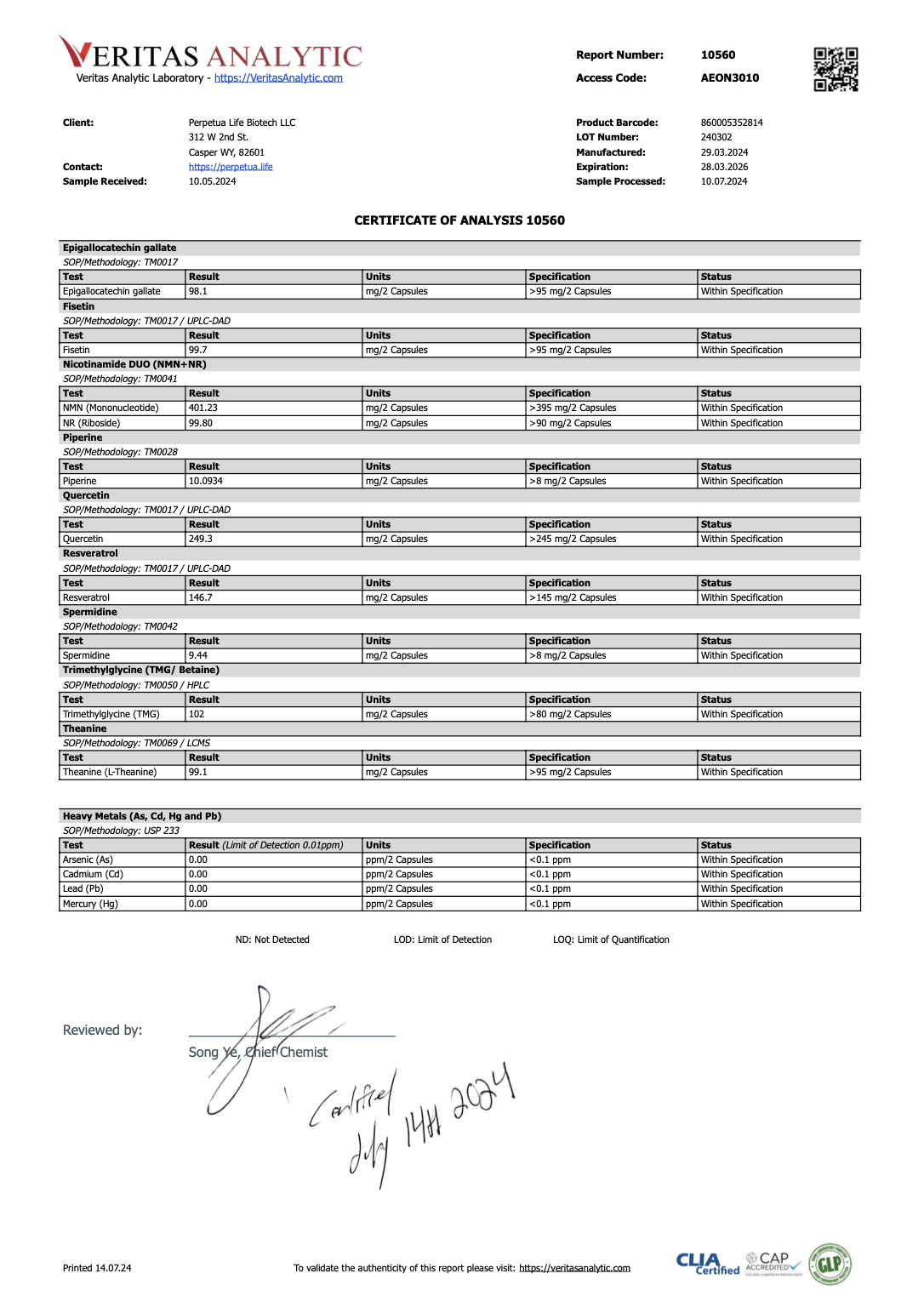
✓ Third-party tested for purity, potency & heavy metals
One-time purchase available in 3 interest-free payments at checkout
60 Capsules • 30-Day Supply
Couldn't load pickup availability
Independently verified for purity, potency, and heavy metals — with full lab results available.
View Verified Lab Results (COA)UK stock • Fast dispatch • No customs (UK orders)
Shipping & International Orders
International shipping available • Import duties & courier fees may apply.
Please note: if an order is refused due to unpaid customs charges, a refund will only be issued if the parcel is returned to us (excluding shipping and return costs). Orders not returned to us are not eligible for a refund.

AEON Black in the morning. AEON White in the evening. Designed to support energy, recovery, and cellular maintenance across a full 24-hour cycle.
Save £28 when purchased as a complete system.
Shop the BundleBundle pricing available on dedicated page
AEON™ White is an advanced NAD+ longevity formulation combining carefully selected compounds in a comprehensive 8-ingredient liposomal complex. Designed for those focused on long-term wellbeing, it brings together key nutrients involved in cellular energy metabolism and healthy ageing processes.
✔ Supports cellular energy production
✔ Supports healthy skin structure
✔ Supports normal cardiovascular function
✔ Supports lipid metabolism
✔ Supports normal immune function
✔ Supports vitality and daily performance
✔ Supports NAD+ metabolism
Our formula is delivered using a Liposomal Delivery Matrix designed to support optimal bioavailability.
AEON is free of preservatives, additives, gluten, animal derived ingredients, and has 0 calories. Made in the USA and third-party tested for potency and heavy metals to ensure consistent quality.
Take 2 capsules daily, preferably in the evening with food.
30 servings per container.
AEON White™ is designed as the evening component of the AEON™ 24-hour longevity protocol and is commonly paired with AEON Black™ during the daytime.
Nicotinamide DUO™ combines two forms of nicotinamide designed to support NAD+ metabolism — a coenzyme involved in cellular energy processes.
1. Cellular Energy & Metabolic Function
1.1 NAD+ plays a central role in mitochondrial function and cellular energy production.
1.2 Maintaining healthy NAD+ levels is an area of growing scientific interest in longevity and metabolic research.
2. Muscle & Physical Performance Research
2.1 NAD+ metabolism has been studied in relation to muscle function and physical capacity.
2.2 Research in ageing populations continues to explore its role in supporting normal muscle maintenance.
3. Cognitive & Neurological Research
3.1 NAD+ is involved in cellular processes within the brain.
3.2 Ongoing research is investigating its role in cellular energy metabolism and oxidative stress pathways.
4. Ageing & Cellular Maintenance Research
4.1 NAD+ levels naturally decline over time, and this decline has been widely studied in longevity science.
4.2 Maintaining NAD+ metabolism is an active area of research in healthy ageing.
5. Metabolic Health Research
5.1 NAD+ is involved in pathways related to glucose metabolism and cellular signalling.
5.2 Research continues to explore its broader role in metabolic function and body composition.
Curcumin is a bioactive compound derived from turmeric that has been widely studied for its role in cellular signalling and oxidative balance.
1. Oxidative Stress Research
Curcumin has been investigated for its interaction with antioxidant pathways and its role in maintaining cellular redox balance.
2. Inflammation Pathway Research
It has been studied for its involvement in cellular signalling pathways related to inflammatory responses.
3. Cellular & Metabolic Research
Curcumin is an active area of research in metabolic and mitochondrial function studies.
4. Brain & Cognitive Research
Research continues to explore curcumin’s role in neuronal signalling pathways and cellular energy metabolism.
5. Cardiovascular Research
Curcumin has been studied in relation to endothelial function and vascular health pathways.
6. Digestive & Microbiome Research
Ongoing research is examining curcumin’s interaction with gut-associated cellular processes.
1. Cellular Energy Metabolism
AKG plays a central role in the Krebs cycle, a core metabolic pathway responsible for cellular energy production (ATP).
2. Longevity & Ageing Research
AKG has been studied in ageing research models due to its involvement in metabolic regulation and cellular signalling pathways.
3. Muscle & Structural Tissue Research
AKG participates in amino acid metabolism and nitrogen balance, areas that are actively studied in relation to muscle maintenance and structural protein synthesis.
4. Bone & Collagen Research
Research continues to explore AKG’s involvement in pathways associated with collagen formation and mineral metabolism.
5. Gut & Cellular Integrity Research
AKG has been examined for its role in cellular energy support within rapidly renewing tissues.
6. Nitrogen Metabolism
AKG contributes to nitrogen transport and metabolic balance as part of normal amino acid processing.
7. Mitochondrial & Metabolic Research
Due to its role in mitochondrial pathways, AKG remains an active area of research in metabolic and cellular function.
Apigenin is a naturally occurring flavonoid found in plants such as parsley and chamomile. It is widely studied for its role in cellular signalling and neurological pathways.
1. Nervous System & Sleep Research
Apigenin has been investigated for its interaction with GABA-related pathways, which are involved in relaxation and normal sleep regulation.
2. Stress & Neurotransmitter Research
Research continues to explore apigenin’s influence on neurotransmitter signalling and nervous system balance.
3. Inflammation Pathway Research
Apigenin has been studied for its involvement in cellular pathways related to inflammatory signalling and immune function.
4. Oxidative Stress Research
As a flavonoid, apigenin has been examined for its interaction with antioxidant pathways and cellular redox balance.
5. Hormone Pathway Research
Preclinical research has explored apigenin’s interaction with certain enzyme systems involved in hormone metabolism.
6. Brain & Cognitive Research
Apigenin remains an active area of research in neuronal signalling and mitochondrial function studies.
7. Cardiovascular Research
Research continues to examine apigenin’s involvement in vascular and endothelial pathways.
8. Ageing & Cellular Research
Apigenin has been included in longevity-related research models due to its role in cellular signalling processes.
Glycine is a naturally occurring amino acid involved in multiple physiological processes, including protein synthesis, neurotransmission and metabolic regulation.
1. Nervous System Research
Glycine functions as a neurotransmitter and is studied for its role in central nervous system signalling pathways.
2. Sleep & Circadian Research
Research has explored glycine’s involvement in pathways related to relaxation and thermoregulation, both of which are associated with normal sleep physiology.
3. Cellular & Mitochondrial Research
Glycine participates in metabolic pathways linked to mitochondrial function and cellular energy processes.
4. Collagen & Structural Protein Synthesis
As a primary component of collagen, glycine plays a role in connective tissue structure and protein formation.
5. Antioxidant Pathway Research
Glycine contributes to the synthesis of glutathione, a compound involved in cellular redox balance.
6. Metabolic Research
Glycine is involved in glucose and nitrogen metabolism, areas that remain active fields of research in metabolic science.
7. Cardiovascular & Vascular Research
Ongoing research continues to explore glycine’s interaction with vascular and nitric oxide-related pathways.
8. Digestive & Nutrient Processing Research
Glycine is involved in bile acid production and broader digestive metabolic processes.
Taurine is a sulfur-containing amino acid naturally present in the body and involved in multiple physiological processes, particularly in the nervous system, cardiovascular system and skeletal muscle.
1. Cellular & Energy Metabolism
Taurine participates in mitochondrial function and cellular energy pathways.
2. Electrolyte & Cellular Balance
It plays a role in maintaining cellular hydration and electrolyte transport across cell membranes.
3. Cardiovascular Research
Taurine has been studied in relation to vascular and cardiac cellular signalling pathways.
4. Neurological Research
As a neuromodulatory compound, taurine is involved in neurotransmitter balance and nervous system signalling processes.
5. Retinal & Structural Tissue Research
Taurine is naturally concentrated in retinal tissue and remains an active area of research in visual physiology.
6. Metabolic Research
Taurine is involved in glucose and lipid metabolism pathways that are widely studied in metabolic science.
7. Oxidative Stress Research
Research continues to examine taurine’s interaction with cellular redox balance and oxidative stress pathways.
8. Longevity & Ageing Research
Emerging research has explored taurine levels in relation to ageing biology and cellular resilience.
Astaxanthin is a naturally occurring carotenoid found in microalgae and marine organisms. It is widely studied for its interaction with cellular antioxidant systems.
1. Oxidative Stress Research
Astaxanthin has been examined for its role in cellular redox balance and free radical signalling pathways.
2. Skin & UV Research
Research continues to explore astaxanthin’s interaction with oxidative pathways involved in skin physiology.
3. Ocular Research
Astaxanthin is studied in relation to retinal tissue due to its presence in visual system research models.
4. Neurological Research
As a lipid-soluble carotenoid, astaxanthin has been examined for its role in neuronal membrane and mitochondrial studies.
5. Cardiovascular Research
Astaxanthin has been included in research investigating lipid metabolism and vascular signalling pathways.
6. Exercise & Mitochondrial Research
Due to its antioxidant properties, astaxanthin is studied in relation to cellular energy metabolism and physical stress models.
7. Immune & Inflammatory Pathway Research
Research continues to examine astaxanthin’s involvement in cellular immune signalling processes.
8. Longevity & Ageing Research
Astaxanthin remains an area of interest in ageing research due to its interaction with oxidative and metabolic pathways.
Lithium is a naturally occurring trace element found in small amounts in water and plant-based foods. In nutritional contexts, low-dose lithium is studied for its role in cellular signalling pathways.
1. Neurological Research
Lithium has been investigated for its interaction with intracellular signalling systems involved in neuronal communication and cellular resilience.
2. Cellular Signalling Pathways
Research has explored lithium’s interaction with enzyme systems such as glycogen synthase kinase (GSK-3), which is involved in multiple cellular regulatory processes.
3. Brain Ageing Research
Lithium remains an active area of research in models examining cellular maintenance and neuronal health over time.
4. Mood & Behaviour Research
Observational research has examined trace lithium exposure in relation to population-level behavioural outcomes.
5. Autophagy & Cellular Maintenance Research
Lithium has been studied in preclinical models for its role in cellular recycling pathways.
6. Longevity Research
Lithium has been included in ageing-related research models exploring cellular signalling and resilience mechanisms.


